✓ Schweizer Online-Shop
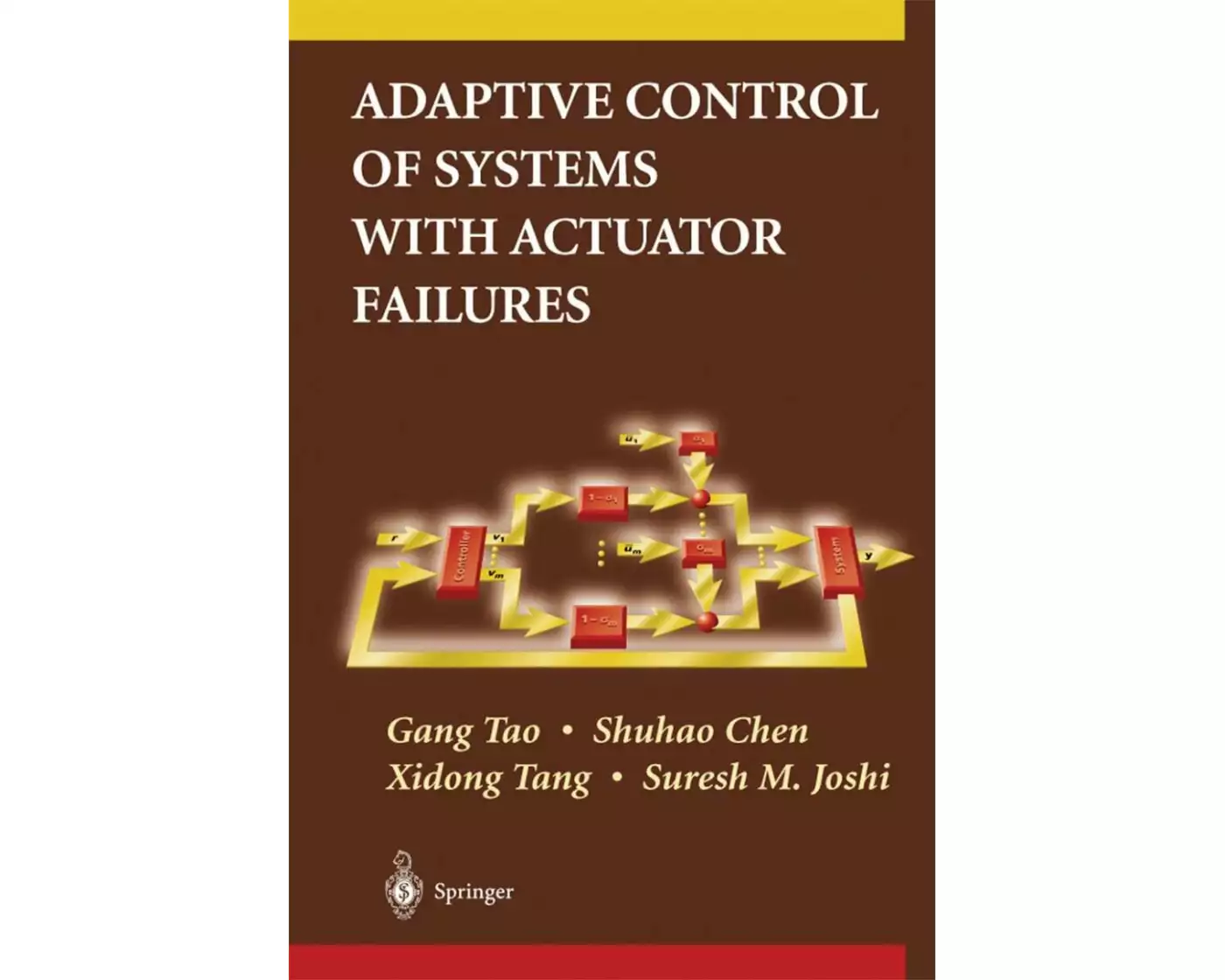
Adaptive Control of Systems with Actuator Failures
Erhältlich:Nicht auf LagerBuch (Hardcover): Fachbuch

Adaptive Control of Systems with Actuator Failures

von Gang Tao, Shuhao Chen, Xidong Tang

Unsere Artikel-Nr.
E2NQ9Y9

Beschreibung

When an actuator fails, chaos or calamity can often ensue. It is because the actuator is the final step in the control chain, when the control system’s instructions are made physically real that failure can be so important and hard to compensate for. When the nature or location of the failure is unknown, the offsetting of consequent system uncertainties becomes even more awkward. Adaptive Control of Systems with Actuator Failures centers on counteracting situations in which unknown control inputs become indeterminately unresponsive over an uncertain period of time by adapting the responses of remaining functional actuators. Both "lock-in-place" and varying-value failures are dealt with. The results presented demonstrate: the existence of nominal plant-model matching controller structures with associated matching conditions for all possible failure patterns; the choice of a desirable adaptive controller structure; derivation of novel error models in the presence of failures; the design of adaptive laws allowing controllers to respond to combinations of uncertainties stemming from activator failures and system parameters. Adaptive Control of Systems with Actuator Failures will be of significance to control engineers generally and especially to both academics and industrial practitioners working on safety-critical systems or those in which full-blown fault identification and diagnosis is either too time consuming or too expensive.

Spezifikationen

SpracheEnglisch
AutorGang Tao, Shuhao Chen, Xidong Tang, Suresh M Joshi
ThemaIndustrielle Chemie: Chemietechnologie, Elektronik: Allgemein, Regelungstechnik, Transportwesen: Fahrzeugbau
ZielgruppeProfessional/practitioner
Erscheinungsjahr2004
ErscheinungslandGrossbritannien
FormatBuch (Hardcover)
Anzahl Seiten299

Inhaltsverzeichnis

1. Introduction.- 2. State Feedback Designs for State Tracking.- 3. State Feedback Designs for Output Tracking.- 4. Output Feedback Designs for Output Tracking.- 5. Designs for Multivariable Systems.- 6. Pole Placement Designs.- 7. Designs for Linearized Aircraft Models.- 8. Robust Designs for Discrete-Time Systems.- 9. Failure Compensation for Nonlinear Systems.- 10. State Feedback Designs for Nonlinear Systems.- 11. Nonlinear Output Feedback Designs.- 12. Conclusions and Research Topics.- A.1 Model Reference Adaptive Control.- A.1.1 MRAC: State Feedback for State Tracking.- A.1.2 MRAC: State Feedback for Output Tracking.- A.1.3 MRAC: Output Feedback for Output Tracking.- A.2 Multivariable MRAC.- A.3 Adaptive Pole Placement Control.- References.

Leserkritik

From the reviews:

The monograph describes adaptive actuator failure compensation control schemes for systems with uncertain actuator failures … The monograph is a comprehensive and self-contained exposition supposing the knowledge of linear systems and feedback control at the undergraduate level. Graduate students, researchers, and professionals working in the areas of control engineering, computer science, and applied mathematics will appreciate this book as a significant up-to-date technical reference in the field.

Zentralblatt MATH 1063 (2005) (Reviewer: Lubomír Bakule)

Bewertungen

Produkt bewerten

Für dieses Produkt liegt noch keine Bewertung vor. Wenn Sie es gekauft haben, teilen Sie gerne Ihre Erfahrung.

Zahlungsarten

payment-einzahlungsscheinpayment-twintpayment-mastercardpayment-visapost-finance-paypayment-apple-paypayment-google-paysamsung-pay

Rechnung (Einzahlungsschein mit QR-Code), Twint, Kreditkarte, PostFinance, Apple, Google oder Samsung Pay.

Versand

Kostenlos: Schweiz & Liechtenstein

Rückgabe

30 Tage Rückgaberecht

Sie können das Produkt innerhalb von 30 Wochentagen ohne Angabe von Gründen zurücksenden, sofern es unbeschädigt und in der Originalverpackung ist.

Weitere Hinweise finden Sie in unseren AGB unter D.1.