
Erhältlich:Nicht auf LagerBuch (Softcover): Fachbuch
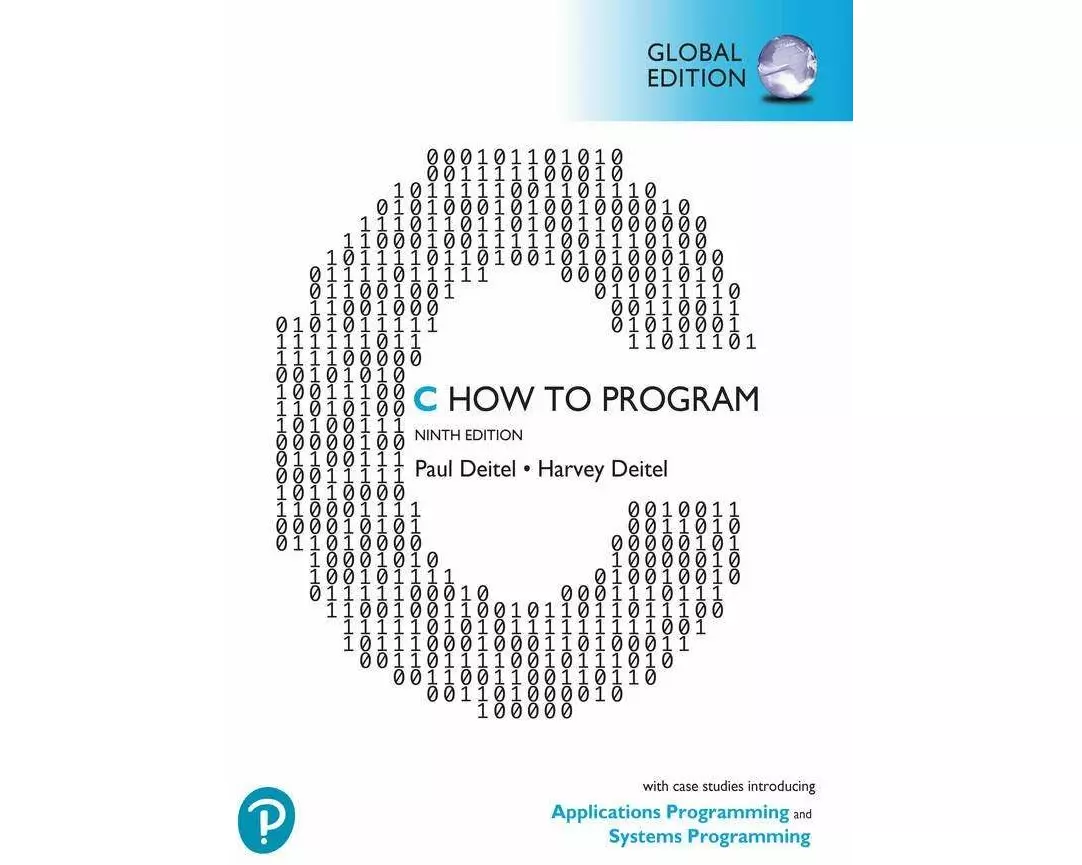
C How to Program: With Case Studies introducing Applications Programming and Systems Programming, Global Edition
von Paul Deitel, Harvey Deitel
- Verlag
- Pearson
- Unsere Artikel-Nr.
- QW32YYW
Beschreibung
This print textbook is available for you to rent for your classes. The Pearson print rental program provides you with affordable access to learning materials, so you go to class ready to succeed. C How to Program. is a user-friendly, code-intensive introduction to C programming with case studies introducing applications and system programming. Like other texts of the Deitels’ How to Program. series, the book’s modular presentation serves as a detailed beginner source of information for college students looking to embark on a career in coding, or instructors and software-development professionals seeking to learn how to program with C. The signature Deitel live-code approach presents concepts in the context of 142 full-working programs rather than incomplete snips of code. This gives you a chance to run each program as you study it and see how your learning applies to real-world programming scenarios. Current standards, contemporary practice, and hands-on learning opportunities are integrated throughout the 9th Edition. Over 340 new integrated Self-Check exercises with answers allow you to test your understanding of important concepts — and check your code — as you read. New and enhanced case studies and exercises use real-world data and focus on the latest ACM/IEEE computing curricula recommendations, highlighting security, data science, ethics, privacy, and performance concepts.
Spezifikationen
| Sprache | Englisch |
|---|---|
| Autor | Paul Deitel, Harvey Deitel |
| Thema | Softwareentwicklung: Programmiersprachen |
| Auflage | 9 |
| Erscheinungsjahr | 2022 |
| Erscheinungsland | Grossbritannien |
| Format | Buch (Softcover) |
| Anzahl Seiten | 832 |
Inhaltsverzeichnis
PART 1: (Introductory) Programming Fundamentals Quickstart
- Introduction to Computers and C: Test-Driving Microsoft Visual Studio, Apple Xcode, GNU gcc, and GNU gcc in a Docker container
- Intro to C Programming: Input, Output, Types, Arithmetic, Decision Making
- Structured Program Development: Algorithmic Development, Problem Solving, if, if/else, while
- Program Control: for, do/while, switch, break, continue, Logical Operators
- Functions: Custom Functions, Simulation, Random-Number Generation, Enumerations, Function Call and Return Mechanism, Recursion, Recursive Factorial, Recursive Fibonacci
- Arrays: One- and Two-Dimensional Arrays, Passing Arrays to Functions, Searching, Sorting
- Pointers: Pointers operators & and , Pass-By-Value vs. Pass-By-Reference, Array and Pointer Relationship
- Characters and Strings: C Standard Library String- and Character-Processing Functions
- Formatted Input/Output: scanf and printf formatting
- Structures, Unions, Bit Manipulation and Enumerations: Creating Custom Types with structs and unions, Bitwise Operators, Named Constants
- File Processing: Streams, Text and Binary Files, CSV Files, Sequential and Random-Access Files
- Data Structures: Dynamic Memory Allocation and Deallocation, Lists, Stacks, Queues, Binary Trees
- Computer-Science Thinking: Sorting Algorithms and Big O Insertion Sort, Selection Sort, Merge Sort, Additional Algorithms including Quicksort in the Exercises
- Preprocessor: #include, Conditional Compilation, Macros with Arguments, Assertions
- Other Topics: Variable-Length Argument Lists, Command-line Arguments, Multiple-Source-Pile Programs, extern, exit/atexit, calloc/realloc, goto, Numeric Literal Suffixes, Signal Handling
- Operator Precedence Chart
- ASCII Character Set
- Numerical Integration
- Number Systems
- Multithreading/Multicore and other C18/C11/C99 Topics
- Intro to Object-Oriented Programming Concepts
- F-H. Using the Visual Studio Debugger, Using the GNU gdb Debugger, and Using the Xcode Debugger
System Programming Case Studies
- Systems Software: Building Your Own Computer
- Systems Software: Building Your Own Compiler
- Embedded Systems Programming: Robotics with the Webots Simulator
- Performance with Multithreading and Multicore Systems
- Random-Number Simulation: Building a Casino Game
- Random-Number Simulation: Card Shuffling and Dealing
- Random-Number Simulation: The Tortoise and the Hare Race
- Intro to Data Science: Survey Data Analysis
- Direct-Access File Processing: Transaction-Processing System
- Visualizing a Sorting Algorithm: Merge Sort
- Artificial Intelligence/Data Science: NLP: Who Wrote Shakespeare's Works?
- Artificial Intelligence/Data Science: Machine Learning with the GNU Scientific Library
- Game Programming: SpotOn Game with the raylib Library
- Game Programming: Cannon Game with the raylib Library
- Security and Cryptography: Implementing a Vigenère Cipher
- Visualization with gnuplot: Law of Large Numbers Animation
- Web Services and the Cloud: libcurl and OpenWeatherMap
Bewertungen
Produkt bewertenFür dieses Produkt liegt noch keine Bewertung vor. Wenn Sie es gekauft haben, teilen Sie gerne Ihre Erfahrung.
Zahlungsarten


Rechnung (Einzahlungsschein mit QR-Code), Twint, Kreditkarte, PostFinance, Apple, Google oder Samsung Pay.
Versand
Kostenlos: Schweiz & Liechtenstein
Rückgabe
30 Tage Rückgaberecht
Sie können das Produkt innerhalb von 30 Wochentagen ohne Angabe von Gründen zurücksenden, sofern es unbeschädigt und in der Originalverpackung ist.
Weitere Hinweise finden Sie in unseren AGB unter D.1.