
Erhältlich:Nicht auf LagerBuch (Hardcover): Fachbuch
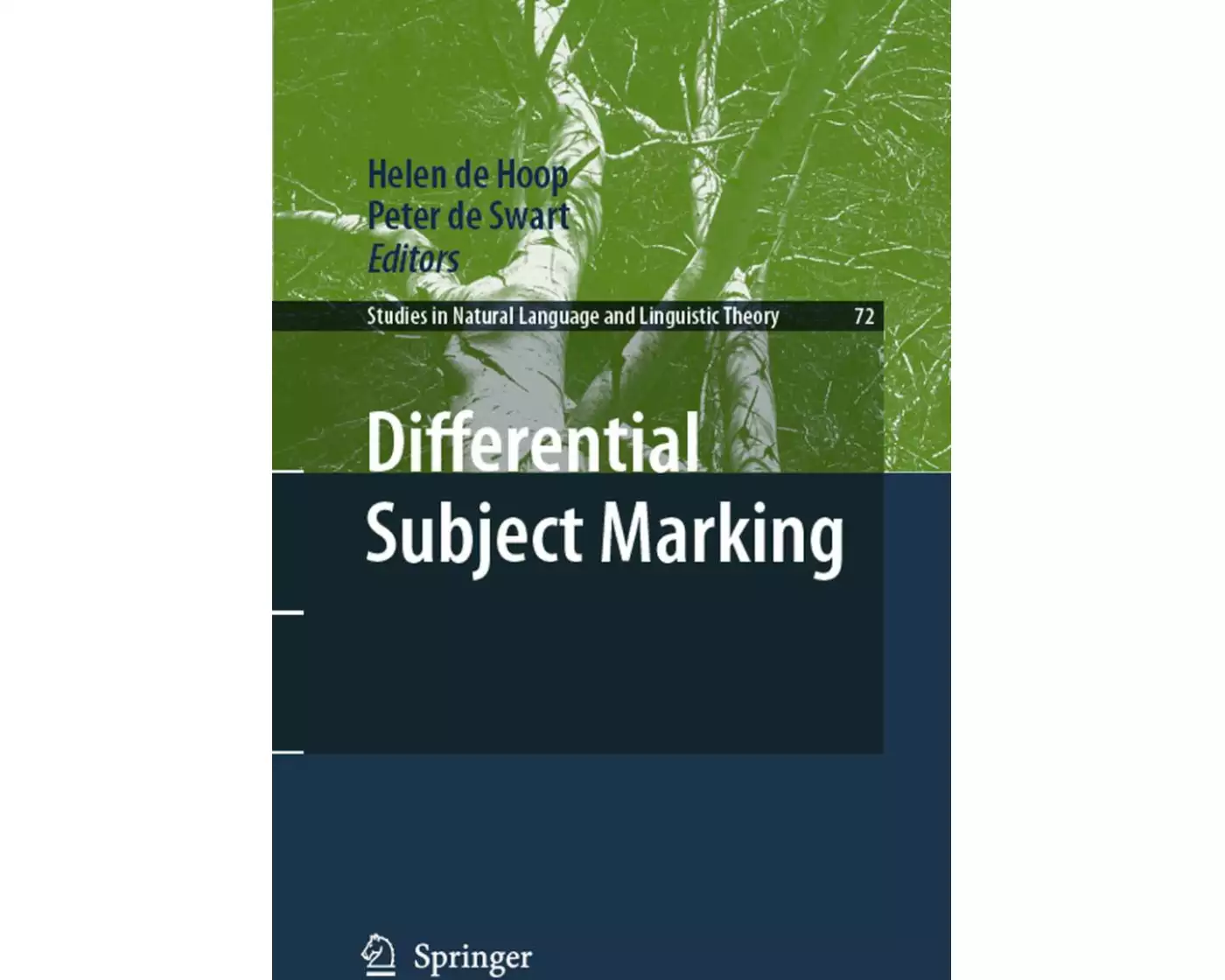
Differential Subject Marking
Herausgegeben von Helen De Hoop, Peter de Swart
- Verlag
- Springer Nature
- EAN
- 9781402064982
- Unsere Artikel-Nr.
- 82Y9LE
Beschreibung
Although (almost) all sentences have subjects, not all sentences encode their subjects in the same way. Some languages overtly mark some subjects, but not others, depending on certain features of the subject argument or the sentence in which the subject figures. This phenomenon is known as Differential Subject Marking (DSM). Languages differ in which conditions govern DSM. Some languages differentiate their subjects on the basis of semantic features of the argument such as thematic role, volitionality, animacy, whereas others differentiate on the basis of clausal features such as tense/aspect and the main/dependent clause distinction. DSM comes in different formal guises: case marking, agreement, inverse systems, and voice alternations. Relatively much is known about cross-linguistic variation in the marking of subjects, yet little attempt has been made to formalize the facts. This volume aims to unify formal approaches to language and presents both specific case studies of DSM and theoretical approaches.
Spezifikationen
| Sprache | Englisch |
|---|---|
| Autor | Helen De Hoop, Peter de Swart |
| Thema | Sprache: Linguistik, Linguistik: Historisch & Vergleichend, Grammatik & Syntax, Studien: Semiotik |
| Kollektion | Studies in Natural Language and Linguistic Theory |
| Zielgruppe | Research |
| Erscheinungsjahr | 2008 |
| Erscheinungsland | Niederlande |
| Format | Buch (Hardcover) |
| Anzahl Seiten | 312 |
Inhaltsverzeichnis
Cross-linguistic Variation in Differential Subject Marking.- Differential Subject Marking at Argument Structure, Syntax, and PF.- Quantitative Variation in Korean Case Ellipsis: Implications for Case Theory.- Ergative Case-marking in Hindi.- DOM and Two Types of DSM in Turkish.- Differential Subject Marking in Polish: The Case of Genitive vs. Nominative Subjects in “X was not at Y”-constructions.- Differential Argument Marking in Two-term Case Systems and its Implications for the General Theory of Case Marking.- Non-canonical Agent Marking in Agul.- From Topic to Subject Marking: Implications for a Typology of Subject Marking.- Grammaticalization and Strategies in Resolving Subject Marking Paradoxes: The Case of Tsimshianic.- Different Subjects, Different Marking.- Differential Marking of Intransitive Subjects in Kambera (Austronesian).
Leserkritik
From the reviews: “This book originates from a 2004 workshop on ‘Differential Subject Marking’ held in Nijmegen. … chapters address DSM phenomena in particular languages. … This collection of articles … succeeds in advancing our understanding of DSM and the factors that determine it. … Researchers interested in case, agreement, and argument structure … will find a rich amount of data in this volume. Linguists with an interest in modeling animacy effects … will be as stimulated by some of the proposals developed here as I have been.” (Raúl Aranovich, Language, Vol. 85 (4), 2009)
Bewertungen
Produkt bewertenFür dieses Produkt liegt noch keine Bewertung vor. Wenn Sie es gekauft haben, teilen Sie gerne Ihre Erfahrung.
Zahlungsarten


Rechnung (Einzahlungsschein mit QR-Code), Twint, Kreditkarte, PostFinance, Apple, Google oder Samsung Pay.
Versand
Kostenlos: Schweiz & Liechtenstein
Rückgabe
30 Tage Rückgaberecht
Sie können das Produkt innerhalb von 30 Wochentagen ohne Angabe von Gründen zurücksenden, sofern es unbeschädigt und in der Originalverpackung ist.
Weitere Hinweise finden Sie in unseren AGB unter D.1.