
Erhältlich:Nicht auf LagerBuch (Softcover): Belletristik
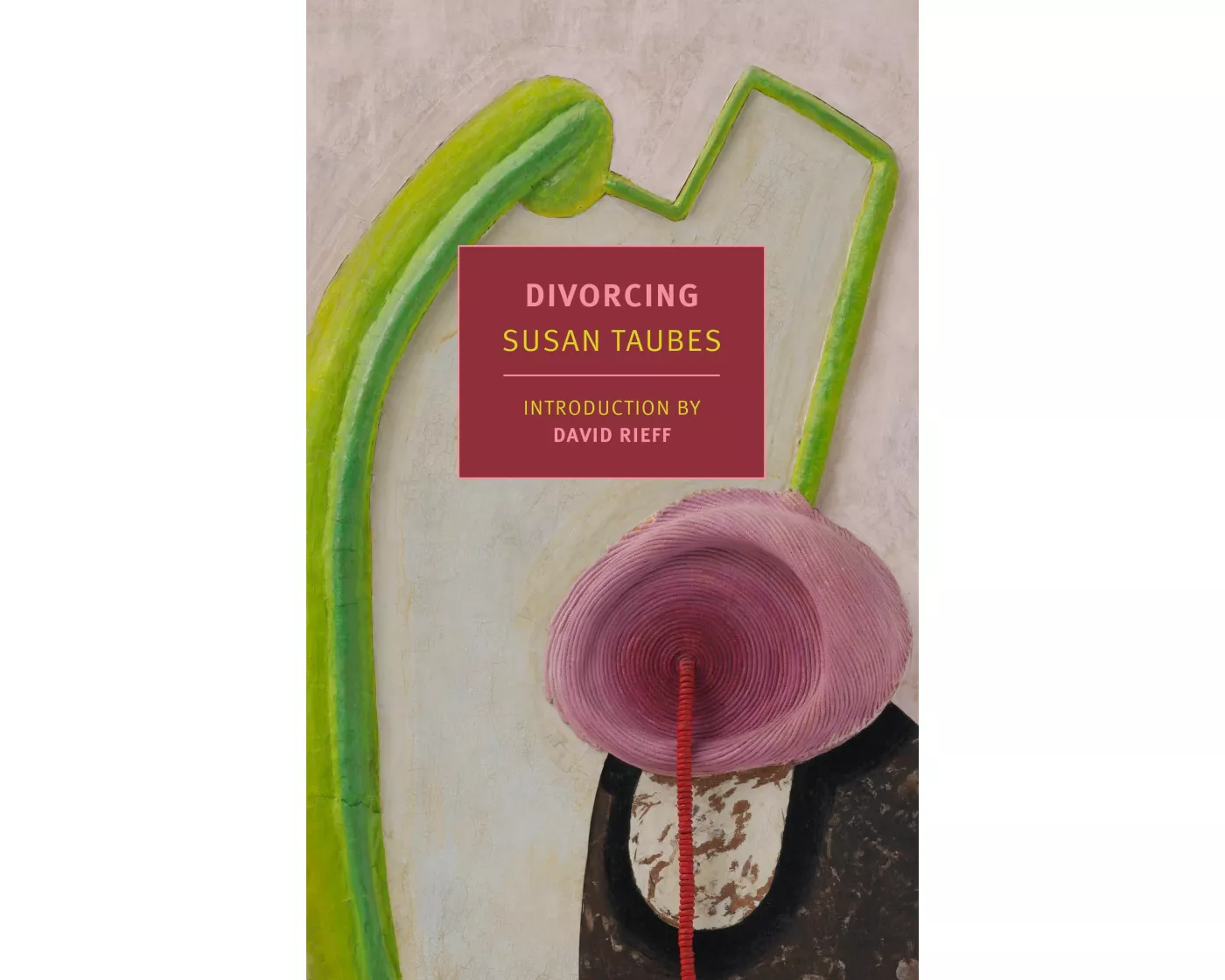
Divorcing
von Susan Taubes, David Rieff
- Verlag
- Penguin Random House
- EAN
- 9781681374949
- Unsere Artikel-Nr.
- YEPKD98
Beschreibung
A stunning novel about childhood, marriage, and divorce by one of the most interesting minds of the 20th century, now back in print for the first time since 1969. Dream and reality overlap in Divorcing, a book in which divorcing is not just a matter of marital collapse but names a rift that runs right through the inner and outer worlds of Sophie Blind, its brilliant but desperate protagonist. Can the rift be mended. Perhaps in the form of a novel, one that goes back from present-day New York to Sophie's childhood in pre-World War II Budapest, that revisits the divorce between her Freudian father and her fickle mother, and finds a place for a host of further tensions and contradictions of her life now. The question that haunts Divorcing, however, is whether any novel can be fleet and bitter and true and light enough to gather up all the darkness of a given life. Susan Taubes's startlingly original novel was published in 1969 but largely ignored; after the author's tragic early death, it was forgotten. Its republication presents a chance to rediscover a dazzlingly intense and inventive writer whose work in many ways anticipates the fragmentary, glancing, lyrical novels that Renata Adler and Elizabeth Hardwick would write in the 1970s.
Spezifikationen
| Sprache | Englisch |
|---|---|
| Autor | Susan Taubes, David Rieff |
| Erscheinungsjahr | 2020 |
| Format | Buch (Softcover) |
| Anzahl Seiten | 288 |
Leserkritik
"Time and history, as experienced both personally and collectively, are just two of the big ideas this novel leaves a reader pondering," —John Williams, The New York Times
“[T]his formally bold novel will gratify admirers of Taubes' friend and contemporary Susan Sontag, Elizabeth's Hardwick's Sleepless Nights, and Margaret Atwood's Cat's Eye. . . . A wry and cerebral study of identity, marriage, sex, and the interleafing of personal, familial, and national history.” —Kirkus Reviews
“Hungarian American writer Taubes first published this brilliant fever dream of the life, loves, and travels of Sophie Blind shortly before her death in 1969. . . . The result parses how a thinking woman might have gone about divorcing herself from a society that defined her in ways over which she had no control. Taubes’s stylistically innovative book is essential reading for fans of Renata Adler.” —Publishers Weekly
"Divorcing heralded the rise of the lean, epigrammatic fiction of the mid-’70s, such as Renata Adler’s Speedboat and Elizabeth Hardwick’s Sleepless Night. . . . Sophie’s cosmopolitanism, her coolness, her sexual appetite, her exhaustion, her intellectualism and indifferent glamor would become recognizable literary capacities, appealing features of a modern protagonist. . . . Divorcing is the stuff of literary cults. It is vivid and inchoate, its surface slick from recent molting. It is fascinating and flawed, a gathering of antithetical forms, sheered edges, leaps of faith…Some works are merely reissued; this feels more like a resurrection.” —Dustin Illingworth, The Paris Review
“Divorcing is often very funny, always alive, bursting with ideas, full of formal vitality and change. . . . [T]his feels like a book both stuffed with fiction and nonfiction, memory and play.” —Scott Cheshire, The Washington Post
"Divorcing is a compendium of severance: not just a wife from her husband, but a family from their homeland, and a people from their God.” —Jess Bergman, Jewish Currents
"Divorcing, teems with stylistic daring, taunts with irreverence, and glints with genius . . . an astonishing work of art, decades ahead of its time, whose formal innovations and insistent excavation of the unspoken corners of female consciousness we now take for granted as de rigueur. . . . Taubes constructs the novel as though piecing together a kaleidoscope of experiences from broken shards of glass. The results are uneven but riveting, ultimately concerned with the question of where writing alone—and the novel form in particular—can take us.” —Jennifer Schaffer, The Nation
Bewertungen
Produkt bewertenFür dieses Produkt liegt noch keine Bewertung vor. Wenn Sie es gekauft haben, teilen Sie gerne Ihre Erfahrung.
Zahlungsarten


Rechnung (Einzahlungsschein mit QR-Code), Twint, Kreditkarte, PostFinance, Apple, Google oder Samsung Pay.
Versand
Kostenlos: Schweiz & Liechtenstein
Rückgabe
30 Tage Rückgaberecht
Sie können das Produkt innerhalb von 30 Wochentagen ohne Angabe von Gründen zurücksenden, sofern es unbeschädigt und in der Originalverpackung ist.
Weitere Hinweise finden Sie in unseren AGB unter D.1.