
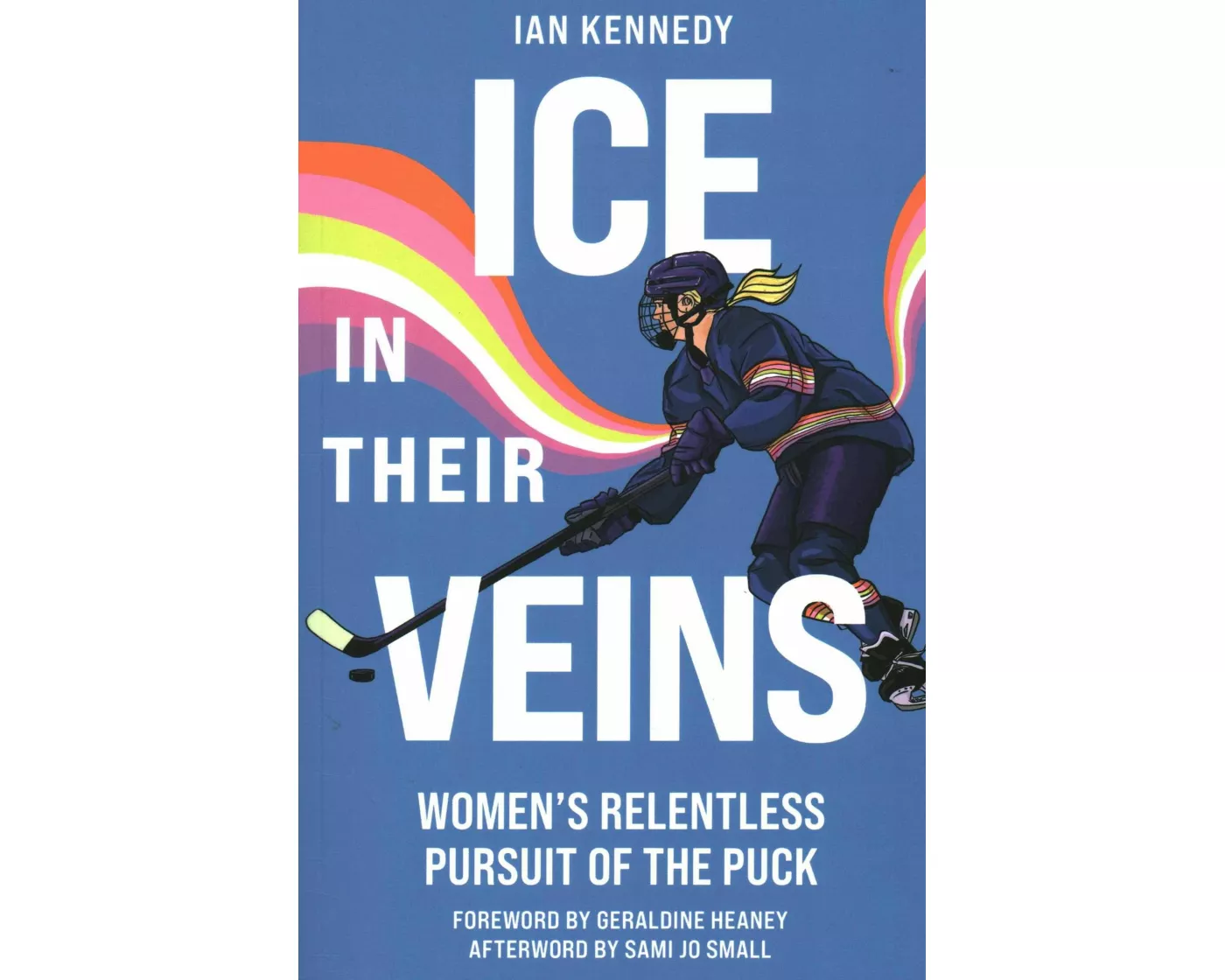
von Ian Kennedy
- Verlag
- Tidewater Press
- Unsere Artikel-Nr.
- Z9WQ5WN
Beschreibung
Women have been playing hockey since the beginning—but their fights took place off the ice. Hockey wasn’t meant to include girls. Women attracted to the speed, finesse and physicality of the game had to overcome condescending attitudes, lack of resources, legal barriers and even sexual assault in their quest for legitimacy and ice time. For more than 150 years, their gender was questioned, monitored, hidden, disparaged and trivialized. Even so, teams were formed and stars emerged. Early tournaments were catalysts, inspiring pioneers with visions of what could be. From “the miracle maid” of the early 20th century to members of today’s Professional Women's Hockey League, these are the stories of women who truly had ice in their veins.
Spezifikationen
| Sprache | Englisch |
|---|---|
| Autor | Ian Kennedy |
| Erscheinungsjahr | 2024 |
| Format | Buch (Softcover) |
| Anzahl Seiten | 228 |
Inhaltsverzeichnis
Contents
Ice in Their Veins – Women’s Relentless Pursuit of the Puck by Ian Kennedy
Foreword – Hockey Hall of Fame member Geraldine Heaney reflects on her career, the challenges and triumphs, and how far women’s hockey has come in her lifetime.
Introduction – Ian Kennedy shares his own experience playing hockey, one in which toxic masculinity excluded women and non-conforming men.
Chapter 1 – Lady-in-Waiting: Initially, skating and hockey were elitist pursuits that excluded all but a select few, one of whom was the wife of the Governor General, Lady Isobel Stanley.
Chapter 2 – A League of Their Own: Playing in the first elite women’s hockey league prior to World War I, Albertine Lapensee was widely considered the best player on the planet. She was so good she must be a boy.
Chapter 3 – No Man’s Land: In the 1930s, there was no greater hockey star than Hilda Ranscombe. Her success was trivialized by gender marking, a practice vociferously opposed by journalist Alexandrine Gibb in her column “No Man’s Land.”
Chapter 4 – Put a Ring on It: The growing popularity of hockey among women led to the introduction of the more “gender appropriate” sport of ringette.
Chapter 5 – Applying Concealer: Whether cutting their hair, wearing the clothes of their brothers or changing their names on registration forms, girls and women including Abby Hoffman and Bev Beaver found ways to compete…until they were discovered by men.
Chapter 6 – Be My Sweetheart: In 1967, the inaugural Lipstick Tournament, organized by a group of high school women in Wallaceburg, Ontario, became the catalyst for growing the women’s game across the continent.
Chapter 7 – Power Plays: In the United States, 1972’s Title IX ruling allowed athletes like Cindy Curley, Cammi Granato, and Estey Ticknor to begin dismantling structural barriers that excluded women from hockey.
Chapter 8 –Fran’s Got a Plan: Fran Rider organized the first unofficial World Championship tournament in 1987, spearheaded the movement to found an official World Championship in 1990, and worked tirelessly to include women in the 1998 Olympics.
Chapter 9 – Captain Coveny: Prior to the 1998 Olympics, women’s stars were completely overlooked. Perhaps no player personifies that better than the first captain of Team Canada, Marian “Mern” Coveny.
Chapter 10 – Hockey Nation: As the women’s game developed in Canada and the United States, players in Europe and Asia—Denmark’s Line Baun Danielson, Sweden’s Kristina Berglund, Japan’s Tamae Satsu, and Canadian coach Carla MacLeod—fought to catch up.
Chapter 11 – Faceoff: in 1981, 11-year-old Justine Blainey began a five-year legal battle for the right to play on a boys’ team, a move that angered both women’s and men’s organizations.
Chapter 12 - Playing Like Girls: Without a professional league, elite players like Shirley Cameron had to balance careers and other responsibilities during their second shift, before their first shift in hockey could begin.
Chapter 13 – Pretty in Pink: When Cathy Phillips, the consensus best goaltender on the planet, and her Canadian teammates, triumphed at their first World Championship in 1990, they were not wearing the typical red and white jerseys. Instead, they were made to wear pink.
Chapter 14 – Red Line: As the women’s game became more prominent, officials like Deb Maybury had to navigate the patriarchal “protection” of women imposed by new rules surrounding bodychecking and equipment.
Chapter 15 – Man Advantage: As long as men controlled the game, legitimacy was only possible if players like Karen Koch, Manon Rheaume, Hayley Wickenheiser, and Kelly Dyer could compete alongside them in professional leagues.
Chapter 16 – Power Forward: Women of colour or members of the LBGTQ+ community faced additional barriers. Players like Angela James and Vicky Sunohara navigated intersectional levels of discrimination and exclusion in sport and society.
Chapter 17 – Breakaway: As successive women’s leagues formed and fell, Sami Jo Small, Jayna Hefford, and John and Johanna Boynton played leading roles in the fight to finally launch one cohesive and sustainable professional women’s hockey league—the PWHL.
Afterword – Whether as an Olympic gold medalist, general manager, team president or broadcaster, Sami Jo Small has seen every aspect of the rise and fall of women’s hockey since the turn of the century. And she’s confident the future is brighter than ever.
Bewertungen
Produkt bewertenFür dieses Produkt liegt noch keine Bewertung vor. Wenn Sie es gekauft haben, teilen Sie gerne Ihre Erfahrung.
Zahlungsarten


Rechnung (Einzahlungsschein mit QR-Code), Twint, Kreditkarte, PostFinance, Apple, Google oder Samsung Pay.
Versand
Kostenlos: Schweiz & Liechtenstein
Rückgabe
Kein Rückgaberecht
Bei diesem Produkt hat entweder der Hersteller/Verlag das Rückgaberecht ausgeschlossen oder eine Rückgabe ist aufgrund des Vertriebssystems nicht möglich.