
Auf Lager:2Buch (Softcover): Sachbuch
Islamic Law and Empire in Ottoman Cairo
von James Baldwin
- Unsere Artikel-Nr.
- Y6N7GD9
Beschreibung
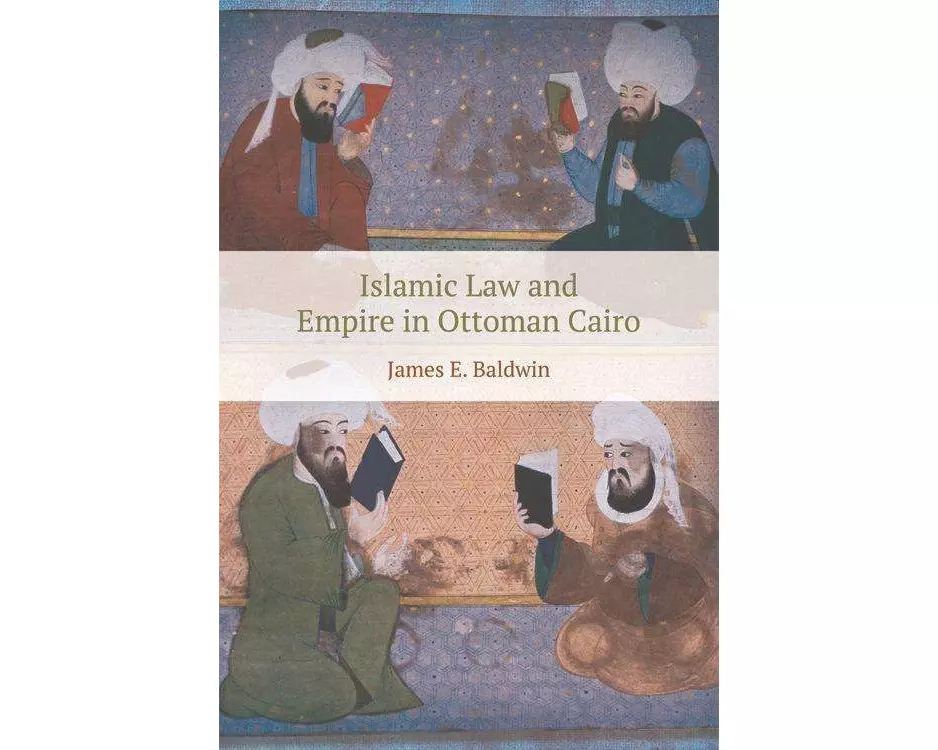
'Drawing on a rich variety of primary sources in both Arabic and Ottoman Turkish, Baldwin provides a valuable reinterpretation of law and politics in Ottoman Egypt and of the relationship between sharīʿa and state power. This is a significant contribution to Islamic legal studies, Ottoman history and scholarship on early-modern Egypt. ' Khaled Fahmy, The American University in Cairo. A study of Islamic law and political power in the Ottoman Empire's richest provincial city What did Islamic law mean in the early modern period, a world of great Muslim empires. Often portrayed as the quintessential jurists' law, to a large extent it was developed by scholars outside the purview of the state. However, for the Sultans of the Ottoman Empire, justice was the ultimate duty of the monarch, and Islamic law was a tool of legitimation and governance. James E. Baldwin examines how the interplay of these two conceptions of Islamic law - religious scholarship and royal justice - undergirded legal practice in Cairo, the largest and richest city in the Ottoman provinces. Through detailed studies of the various formal and informal dispute resolution institutions and practices that formed the fabric of law in Ottoman Cairo, his book addresses key questions concerning the relationship between the sharīʿa and political power, the plurality of Islamic legal practice, and the nature of centre-periphery relations in the Ottoman Empire. Key Features - Offers a new interpretation of the relationship between Islamic law and political power - Presents law as the key nexus connecting Egypt with the imperial capital Istanbul during the period of Ottoman decentralisation - Studies judicial institutions such as the governor's Dīwān and the imperial council that have received little attention in previous scholarship - Integrates the study of legal records with an analysis of how legal practice was represented in contemporary chronicles - Provides transcriptions and translations of a range of Ottoman legal documents James E. Baldwin is Lecturer in Empires of the Early Modern Muslim World at Royal Holloway, University of London. Cover image: The four founders of Sunni jurisprudence: Abu Hannifa (Hanafi school of fiqh), Malik Ibn Anas (Maliki Madhab school) and Muhammad ibn Idris al-Schafii (Shafi'i school of fiqh). Turkish minianture, 16th Century, Istanbul, Topkapı Serail Library (c) Roland and Sabrina Michaud / akg-images. Cover design: [EUP logo] edinburghuniversitypress. com ISBN 978-1-4744-0309-2 Barcode
Spezifikationen
| Sprache | Englisch |
|---|---|
| Autor | James Baldwin |
| Erscheinungsjahr | 2018 |
| Format | Buch (Softcover) |
| Anzahl Seiten | 248 |
Inhaltsverzeichnis
Abbreviations
Abbreviations
Note on transliteration and dates
Introduction
1. A Brief Portrait of Cairo under Ottoman Rule
2. Cairo's Legal System: Institutions and Actors
3. Royal Justice: The Divan-i Hümayun and the Diwan al-¿Ali
4. Government Authority, the Interpretation of Fiqh, and the Production of Applied Law
5. The Privatization of Justice: Dispute Resolution as a Domain of Political Competition
6. A Culture of Disputing: How Did Cairenes Use the Legal System?
Conclusion: Ottoman Cairo's legal system and grand narratives
Appendix: Examples of Documents Used in this Study
Notes
Map: Cairo in the Eighteenth Century
Glossary
Sources and Works Cited
Index
Bewertungen
Produkt bewertenFür dieses Produkt liegt noch keine Bewertung vor. Wenn Sie es gekauft haben, teilen Sie gerne Ihre Erfahrung.
Zahlungsarten


Rechnung (Einzahlungsschein mit QR-Code), Twint, Kreditkarte, PostFinance, Apple, Google oder Samsung Pay.
Versand
Kostenlos: Schweiz & Liechtenstein
Rückgabe
Kein Rückgaberecht
Bei diesem Produkt hat entweder der Hersteller/Verlag das Rückgaberecht ausgeschlossen oder eine Rückgabe ist aufgrund des Vertriebssystems nicht möglich.