✓ Schweizer Online-Shop
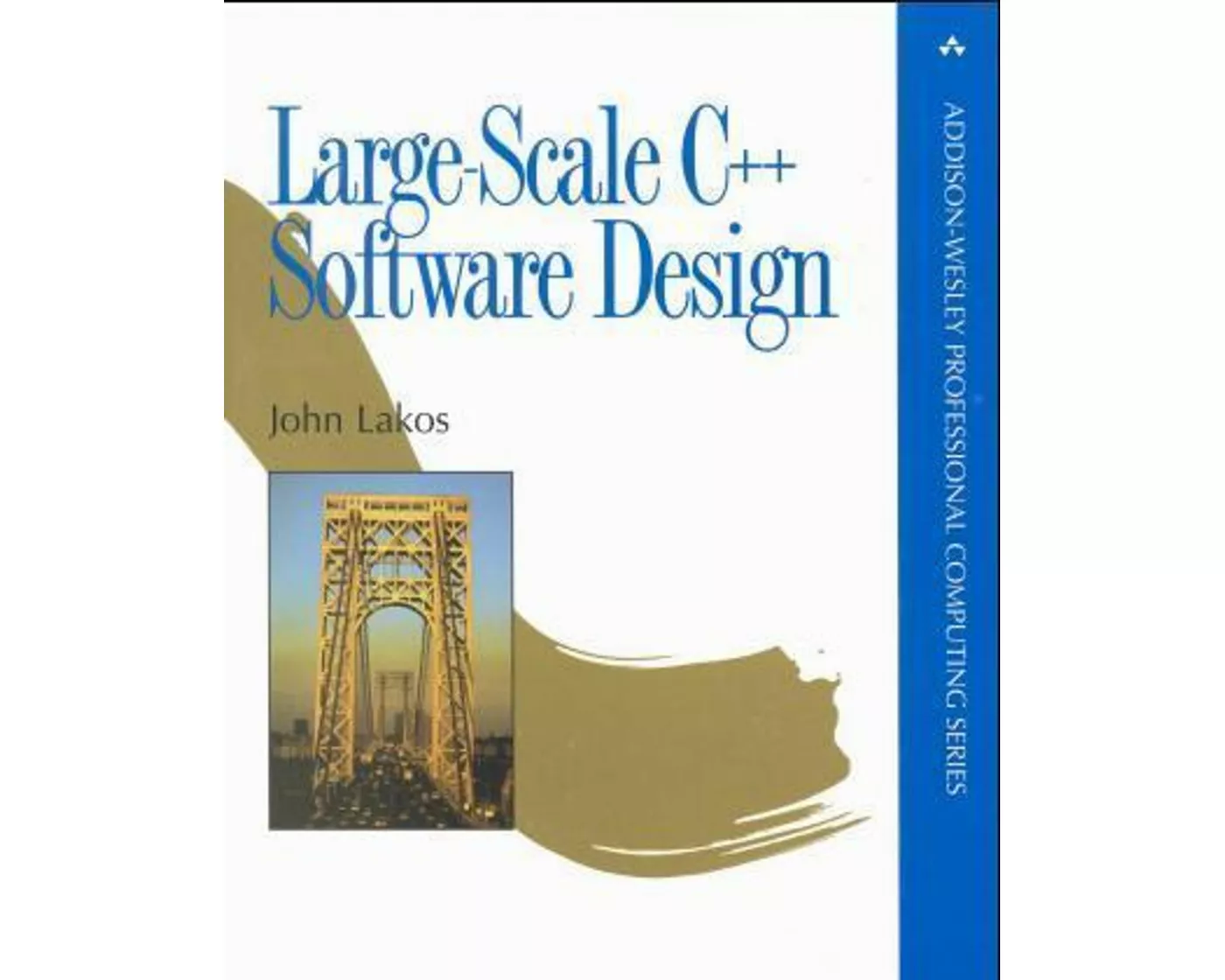
Large-Scale C++ Software Design
Erhältlich:Nicht auf LagerBuch (Softcover): Fachbuch

Large-Scale C++ Software Design

von John Lakos

Verlag
Pearson
Unsere Artikel-Nr.
Z7D5EVG

Beschreibung

include a dimension with which even expert software developers may have little or no experience. This is the definitive book for all C software professionals involved in large development efforts such as databases, operating systems, compilers, and frameworks. It is the first C book that actually demonstrates how to design large systems, and one of the few books on object-oriented design specifically geared to practical aspects of the C programming language. In this book, Lakos explains the process of decomposing large systems into physical (not inheritance) hierarchies of smaller, more manageable components. Such systems with their acyclic physical dependencies are fundamentally easier and more economical to maintain, test, and reuse than tightly interdependent systems. In addition to explaining the motivation for following good physical as well as logical design practices, Lakos provides you with a catalog of specific techniques designed to eliminate cyclic, compile-time, and link-time (physical) dependencies. He then extends these concepts from large to very large systems. The book concludes with a comprehensive top-down approach to the logical design of individual components. Appendices include a valuable design pattern "Protocol Hierarchy" designed to avoid fat interfaces while minimizing physical dependencies; the details of implementing an ANSI C compatible C procedural interface; and a complete specification for a suite of UNIX-like tools to extract and analyze physical dependencies. Practical design rules, guidelines, and principles are also collected in an appendix and indexed for quick reference.

Spezifikationen

SpracheEnglisch
AutorJohn Lakos
Erscheinungsjahr1996
FormatBuch (Softcover)
Anzahl Seiten896

Inhaltsverzeichnis


Preface.


0. Introduction.

From C to C++.

Using C++ to Develop Large Projects.

Reuse.

Quality.

Software Development Tools.

Summary.

I. BASICS.

1. Preliminaries.

Multi-File C++ Programs.

typedef Declarations.

Assert Statements.

A Few Matters of Style.

Iterators.

Logical Design Notation.

Inheritance versus Layering.

Minimality.

Summary.
2. Ground Rules.

Overview.

Member Data Access.

The Global Name Space.

Include Guards.

Redundant Include Guards.

Documentation.

Identifier-Naming Conventions.

Summary.

II. PHYSICAL DESIGN CONCEPTS.

3. Components.

Components versus Classes.

Physical Design Rules.

The DependsOn Relation.

Implied Dependency.

Extracting Actual Dependencies.

Friendship.

Summary.
4. Physical Hierarchy.

A Metaphor for Software Testing.

A Complex Subsystem.

The Difficulty in Testing “Good” Interfaces.

Design for Testability.

Testing in Isolation.

Acyclic Physical Dependencies.

Level Numbers.

Hierarchical and Incremental Testing.

Testing a Complex Subsystem.

Testing versus Tested.

Cyclic Physical Dependencies.

Cumulative Component Dependency (CCD).

Physical Design Quality.

Summary.
5. Levelization.

Some Causes of Cyclic Physical Dependencies.

Escalation.

Demotion.

Opaque Pointers.

Dumb Data.

Redundancy.

Callbacks.

Manager Class.

Factoring.

Escalating Encapsulation.

Summary.
6. Insulation.

From Encapsulation to Insulation.

C++ Constructs and Compile-Time Coupling.

Partial Insulation Techniques.

Total Insulation Techniques.

The Procedural Interface.

To Insulate or Not to Insulate.

Summary.
7. Packages.

From Components to Packages.

Registered Package Prefixes.

Package Levelization.

Package Insulation.

Package Groups.

The Release Process.

The main Program.

Start-Up Time.

Summary.

III. LOGICAL DESIGN ISSUES.

8. Architecting a Component.

Abstractions and Components.

Component Interface Design.

Degrees of Encapsulation.

Auxiliary Implementation Classes.

Summary.
9. Designing a Function.

Function Specification.

Fundamental Types Used in the Interface.

Special Case Functions.

Summary.
10. Implementing an Object.

Member Data.

Function Definitions.

Memory Management.

Using C++ Templates in Large Projects.

Summary.
Appendix A. Protocol Hierarchy.

Appendix B. Implementing an ANSI C-Compatible C++ Interface.

Appendix C. A Dependency Extractor/Analyzer Package.

Appendix D. Quick Reference.

Index. 0201633620T04062001

Bewertungen

Produkt bewerten

Für dieses Produkt liegt noch keine Bewertung vor. Wenn Sie es gekauft haben, teilen Sie gerne Ihre Erfahrung.

Zahlungsarten

payment-einzahlungsscheinpayment-twintpayment-mastercardpayment-visapost-finance-paypayment-apple-paypayment-google-paysamsung-pay

Rechnung (Einzahlungsschein mit QR-Code), Twint, Kreditkarte, PostFinance, Apple, Google oder Samsung Pay.

Versand

Kostenlos: Schweiz & Liechtenstein

Rückgabe

30 Tage Rückgaberecht

Sie können das Produkt innerhalb von 30 Wochentagen ohne Angabe von Gründen zurücksenden, sofern es unbeschädigt und in der Originalverpackung ist.

Weitere Hinweise finden Sie in unseren AGB unter D.1.