
Erhältlich:Nicht auf LagerBuch (Softcover): Fachbuch
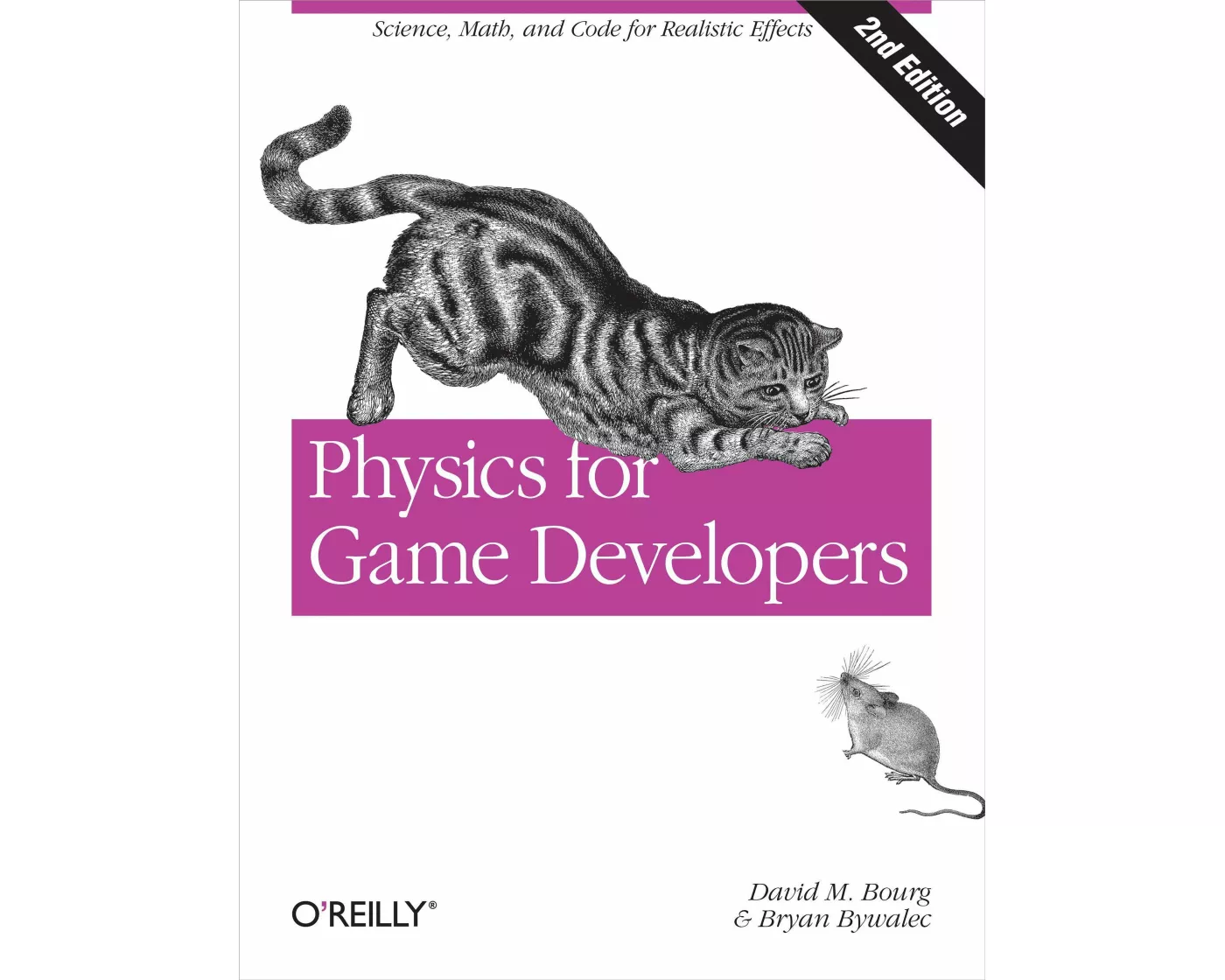
Physics for Game Developers 2e
von David M Bourg
- Verlag
- O'Reilly
- Unsere Artikel-Nr.
- 2EL89GY
Beschreibung
If you want to enrich your game’s experience with physics-based realism, the expanded edition of this classic book details physics principles applicable to game development. You’ll learn about collisions, explosions, sound, projectiles, and other effects used in games on Wii, PlayStation, Xbox, smartphones, and tablets. You’ll also get a handle on how to take advantage of various sensors such as accelerometers and optical tracking devices. Authors David Bourg and Bryan Bywalec show you how to develop your own solutions to a variety of problems by providing technical background, formulas, and a few code examples. This updated book is indispensable whether you work alone or as part of a team. Refresh your knowledge of classical mechanics, including kinematics, force, kinetics, and collision response Explore rigid body dynamics, using real-time 2D and 3D simulations to handle rotation and inertia Apply concepts to real-world problems: model the behavior of boats, airplanes, cars, and sports balls Enhance your games with digital physics, using accelerometers, touch screens, GPS, optical tracking devices, and 3D displays Capture 3D sound effects with the OpenAL audio API
Spezifikationen
| Sprache | Englisch |
|---|---|
| Autor | David M Bourg |
| Erscheinungsjahr | 2013 |
| Format | Buch (Softcover) |
Inhaltsverzeichnis
Preface;
Who Is This Book For?;
What We Assume You Know;
Mechanics;
Digital Physics;
Arrangement of This Book;
Conventions Used in This Book;
Using Code Examples;
Safari® Books Online;
How to Contact Us;
Acknowledgments;
Fundamentals;
Chapter 1: Basic Concepts;
1.1 Newton's Laws of Motion;
1.2 Units and Measures;
1.3 Coordinate System;
1.4 Vectors;
1.5 Derivatives and Integrals;
1.6 Mass, Center of Mass, and Moment of Inertia;
1.7 Newton's Second Law of Motion;
1.8 Inertia Tensor;
1.9 Relativistic Time;
Chapter 2: Kinematics;
2.1 Velocity and Acceleration;
2.2 Constant Acceleration;
2.3 Nonconstant Acceleration;
2.4 2D Particle Kinematics;
2.5 3D Particle Kinematics;
2.6 Kinematic Particle Explosion;
2.7 Rigid-Body Kinematics;
2.8 Local Coordinate Axes;
2.9 Angular Velocity and Acceleration;
Chapter 3: Force;
3.1 Forces;
3.2 Force Fields;
3.3 Friction;
3.4 Fluid Dynamic Drag;
3.5 Pressure;
3.6 Buoyancy;
3.7 Springs and Dampers;
3.8 Force and Torque;
3.9 Summary;
Chapter 4: Kinetics;
4.1 Particle Kinetics in 2D;
4.2 Particle Kinetics in 3D;
4.3 Rigid-Body Kinetics;
Chapter 5: Collisions;
5.1 Impulse-Momentum Principle;
5.2 Impact;
5.3 Linear and Angular Impulse;
5.4 Friction;
Chapter 6: Projectiles;
6.1 Simple Trajectories;
6.2 Drag;
6.3 Magnus Effect;
6.4 Variable Mass;
Rigid-Body Dynamics;
Chapter 7: Real-Time Simulations;
7.1 Integrating the Equations of Motion;
7.2 Euler's Method;
7.3 Better Methods;
7.4 Summary;
Chapter 8: Particles;
8.1 Simple Particle Model;
8.2 The Basic Simulator;
8.3 Implementing External Forces;
8.4 Implementing Collisions;
8.5 Tuning;
Chapter 9: 2D Rigid-Body Simulator;
9.1 Model;
9.2 The Basic Simulator;
9.3 Tuning;
Chapter 10: Implementing Collision Response;
10.1 Linear Collision Response;
10.2 Angular Effects;
Chapter 11: Rotation in 3D Rigid-Body Simulators;
11.1 Rotation Matrices;
11.2 Quaternions;
11.3 Quaternions in 3D Simulators;
Chapter 12: 3D Rigid-Body Simulator;
12.1 Model;
12.2 Integration;
12.3 Flight Controls;
Chapter 13: Connecting Objects;
13.1 Springs and Dampers;
13.2 Connecting Particles;
13.3 Connecting Rigid Bodies;
Chapter 14: Physics Engines;
14.1 Building Your Own Physics Engine;
Physical Modeling;
Chapter 15: Aircraft;
15.1 Geometry;
15.2 Lift and Drag;
15.3 Other Forces;
15.4 Control;
15.5 Modeling;
Chapter 16: Ships and Boats;
16.1 Stability and Sinking;
16.2 Ship Motions;
16.3 Resistance and Propulsion;
16.4 Maneuverability;
Chapter 17: Cars and Hovercraft;
17.1 Cars;
17.2 Hovercraft;
Chapter 18: Guns and Explosions;
18.1 Projectile Motion;
18.2 Taking Aim;
18.3 Recoil and Impact;
18.4 Explosions;
Chapter 19: Sports;
19.1 Modeling a Golf Swing;
19.2 Billiards;
Digital Physics;
Chapter 20: Touch Screens;
20.1 Types of Touch Screens;
20.2 Step-by-Step Physics;
20.3 Example Program;
20.4 Other Considerations;
Chapter 21: Accelerometers;
21.1 Accelerometer Theory;
21.2 Sensing Orientation;
21.3 Sensing Tilt;
Chapter 22: Gaming from One Place to Another;
22.1 Location-Based Gaming;
22.2 What Time Is It?;
22.3 Location, Location, Location;
Chapter 23: Pressure Sensors and Load Cells;
23.1 Under Pressure;
23.2 Button Mashing;
23.3 Barometers;
Chapter 24: 3D Display;
24.1 Binocular Vision;
24.2 Stereoscopic Basics;
24.3 Types of Display;
24.4 Programming Considerations;
Chapter 25: Optical Tracking;
25.1 Sensors and SDKs;
25.2 Numerical Differentiation;
Chapter 26: Sound;
26.1 What Is Sound?;
26.2 Characteristics of and Behavior of Sound Waves;
26.3 3D Sound;
Vector Operations;
Vector Class;
Vector Functions and Operators;
Matrix Operations;
Matrix3×3 Class;
Matrix Functions and Operators;
Quaternion Operations;
Quaternion Class;
Quaternion Functions and Operators;
Bibliography;
General Physics and Dynamics;
Mathematics and Numerical Methods;
Computational Geometry;
Projectiles;
Sports Ball Physics;
Aerodynamics;
Hydrostatics and Hydrodynamics;
Automobile Physics;
Real-time Physics Simulations;
Digital Physics;
Colophon;
Bewertungen
Produkt bewertenFür dieses Produkt liegt noch keine Bewertung vor. Wenn Sie es gekauft haben, teilen Sie gerne Ihre Erfahrung.
Zahlungsarten


Rechnung (Einzahlungsschein mit QR-Code), Twint, Kreditkarte, PostFinance, Apple, Google oder Samsung Pay.
Versand
Kostenlos: Schweiz & Liechtenstein
Rückgabe
30 Tage Rückgaberecht
Sie können das Produkt innerhalb von 30 Wochentagen ohne Angabe von Gründen zurücksenden, sofern es unbeschädigt und in der Originalverpackung ist.
Weitere Hinweise finden Sie in unseren AGB unter D.1.