
Erhältlich:Nicht auf LagerBuch (Softcover): Sachbuch
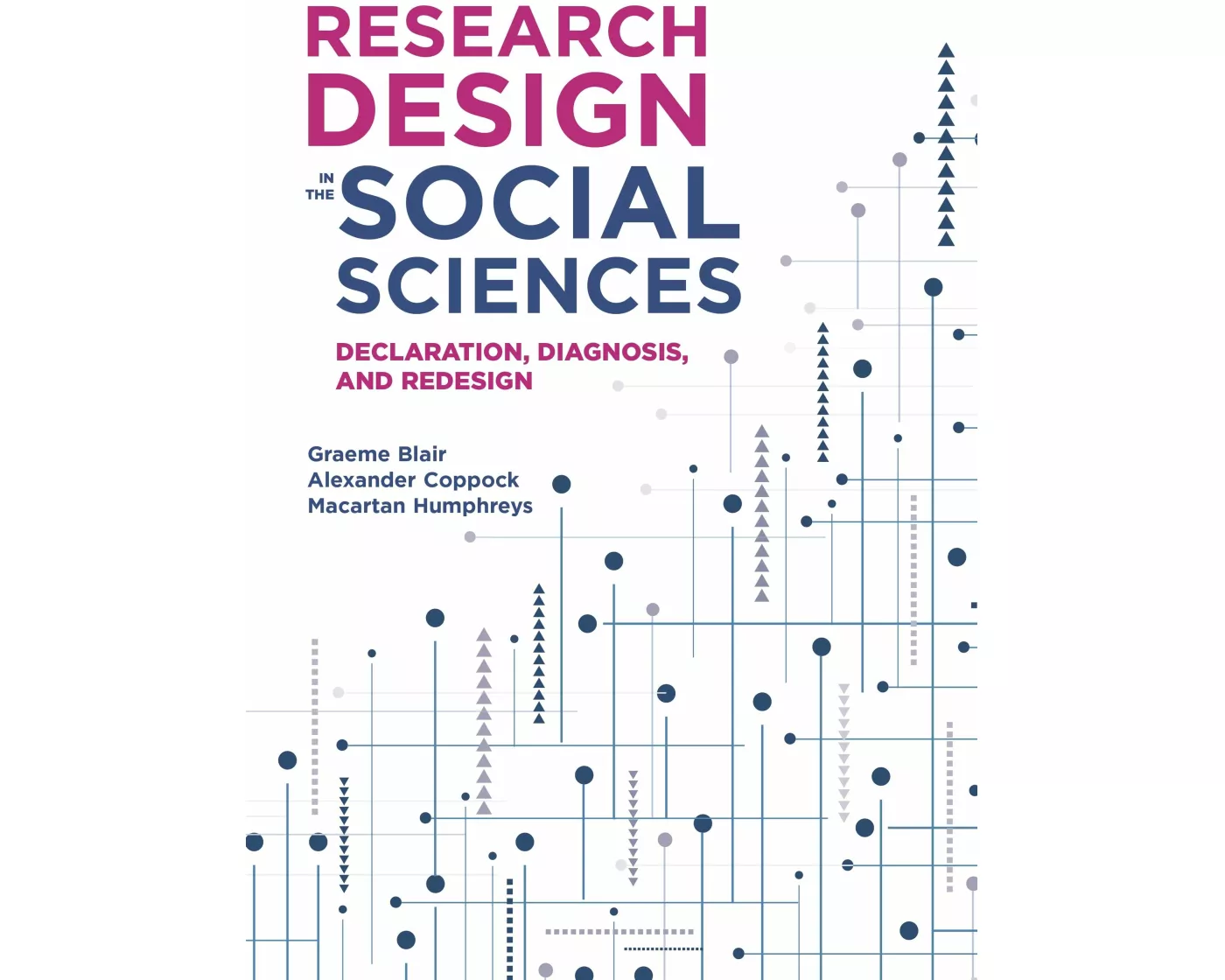
Research Design in the Social Sciences
Declaration, Diagnosis, and Redesign
von Alexander Coppock, Graeme Blair, Humphreys Macartan
- Unsere Artikel-Nr.
- 4DLP4WV
Beschreibung
A state-of-the-art approach to evaluating research design for students and scholars across the social sciencesAssessing the properties of research designs before implementing them can be tricky for even the most seasoned researchers. This book provides a powerful framework‿Model, Inquiry, Data Strategy, and Answer Strategy, or MIDA‿for describing any empirical research design in the social sciences. MIDA enables you to characterize the key analytic features of observational and experimental designs, qualitative and quantitative designs, and descriptive and causal designs. An accompanying algorithm lets you declare designs in the MIDA framework, diagnose properties such as bias and precision, and redesign features like sampling, assignment, measurement, and estimation procedures. Research Design in the Social Sciences is an essential tool kit for the entire life of a research project, from planning and realization of design to the integration of your results into the scientific literature. A must-have resource for current and future researchers who want to learn about the properties of their designs before they implement themIncludes a library of the most common designs in the social sciencesProvides a complete declaration of the canonical design for each library entry, describes the circumstances under which the design can be strong or weak, and explores the consequences of the choices under the research designer‿s controlAccompanied by online resources that can be used in conjunction with the bookAn ideal textbook for graduate students and advanced undergraduates
Spezifikationen
| Sprache | Englisch |
|---|---|
| Autor | Alexander Coppock, Graeme Blair, Humphreys Macartan |
| Erscheinungsjahr | 2023 |
| Format | Buch (Softcover) |
| Anzahl Seiten | 392 |
Inhaltsverzeichnis
- Acknowledgements
- Part I Introduction
- 1 Preamble
- 1.1 How to Read This Book
- 1.2 How to Work This Book
- 1.3 What This Book Will Not Do
- 2 What Is a Research Design?
- 2.1 MIDA: The Four Elements of a Research Design
- 2.2 Declaration, Diagnosis, Redesign
- 2.3 Example: A Decision Problem
- 2.4 Putting Designs to Use
- 3 Research Design Principles
- 4 Getting Started
- 4.1 Installing R
- 4.2 Declaration
- 4.3 Diagnosis
- 4.4 Redesign
- 4.5 Library of Designs
- 4.6 Long-Term Code Usability
- Part II Declaration, Diagnosis, Redesign
- 5 Declaring Designs
- 5.1 De¿nition of Research Designs
- 5.2 Declaration in Code
- 6 Specifying the Model
- 6.1 Elements of Models
- 6.2 Types of Variables in Models
- 6.3 How to Specify Models
- 6.4 Summary
- 7 De¿ning the Inquiry
- 7.1 Elements of Inquiries
- 7.2 Types of Inquiries
- 7.3 How to De¿ne Inquiries
- 7.4 Summary
- 8 Crafting a Data Strategy
- 8.1 Elements of Data Strategies
- 8.2 How to Craft Data Strategies
- 8.3 Summary
- 9 Choosing an Answer Strategy
- 9.1 Elements of Answer Strategies
- 9.2 Types of Answer Strategies
- 9.3 How to Choose an Answer Strategy
- 9.4 Summary
- 10 Diagnosing Designs
- 10.1 Elements of Diagnoses
- 10.2 Types of Diagnosands
- 10.3 Estimation of Diagnosands
- 10.4 How to Diagnose Designs
- 10.5 Summary
- 11 Redesigning
- 11.1 Redesigning over Data Strategies
- 11.2 Redesigning over Answer Strategies
- 11.3 Summary
- 12 Design Example
- 12.1 Declaration in Words
- 12.2 Declaration in Code
- 12.3 Diagnosis
- 12.4 Redesign
- 13 Designing in Code
- 13.1 Model
- 13.2 Inquiry
- 13.3 Data Strategy
- 13.4 Answer Strategy
- 13.5 Declaration
- 13.6 Diagnosis
- 13.7 Redesign
- Part III Research Design Library
- 14 Research Design Library
- 15 Observational: Descriptive
- 15.1 Simple Random Sampling
- 15.2 Cluster Random Sampling
- 15.3 Multilevel Regression and Poststrati¿cation
- 15.4 Index Creation
- 16 Observational: Causal
- 16.1 Process Tracing
- 16.2 Selection-on-Observables
- 16.3 Di¿erence-in-Di¿erences
- 16.4 Instrumental Variables
- 16.5 Regression Discontinuity Designs
- 17 Experimental: Descriptive
- 17.1 Audit Experiments
- 17.2 List Experiments
- 17.3 Conjoint Experiments
- 17.4 Behavioral Games
- 18 Experimental: Causal
- 18.1 Two-Arm Randomized Experiments
- 18.2 Block-Randomized Experiments
- 18.3 Cluster-Randomized Experiments
- 18.4 Subgroup Designs
- 18.5 Factorial Experiments
- 18.6 Encouragement Designs
- 18.7 Placebo-Controlled Experiments
- 18.8 Stepped-Wedge Experiments
- 18.9 Randomized Saturation Experiments
- 18.10 Experiments over Networks
- 19 Complex Designs
- 19.1 Discovery Using Causal Forests
- 19.2 Structural Estimation
- 19.3 Meta-analysis
- 19.4 Multi-site Studies
- Part IV Research Design Lifecycle
- 20 Research Design Lifecycle
- 21 Planning
- 21.1 Ethics
- 21.2 Partners
- 21.3 Funding
- 21.4 Piloting
- 21.5 Criticism
- 21.6 Preanalysis Plan
- 22 Realization
- 22.1 Pivoting
- 22.2 Populated Preanalysis Plan
- 22.3 Reconciliation
- 22.4 Writing
- 23 Integration
- 23.1 Communicating
- 23.2 Archiving
- 23.3 Reanalysis
- 23.4 Replication
- 23.5 Meta-analysis
- Part V Epilogue
- 24 Epilogue
- Part VI References
- Bibliography
- Index
Leserkritik
"Winner of the Best Book Award, Experiments Section of the American Political Science Association"
Bewertungen
Produkt bewertenFür dieses Produkt liegt noch keine Bewertung vor. Wenn Sie es gekauft haben, teilen Sie gerne Ihre Erfahrung.
Zahlungsarten


Rechnung (Einzahlungsschein mit QR-Code), Twint, Kreditkarte, PostFinance, Apple, Google oder Samsung Pay.
Versand
Kostenlos: Schweiz & Liechtenstein
Rückgabe
30 Tage Rückgaberecht
Sie können das Produkt innerhalb von 30 Wochentagen ohne Angabe von Gründen zurücksenden, sofern es unbeschädigt und in der Originalverpackung ist.
Weitere Hinweise finden Sie in unseren AGB unter D.1.