
Auf Lager:2Buch (Hardcover): Sachbuch
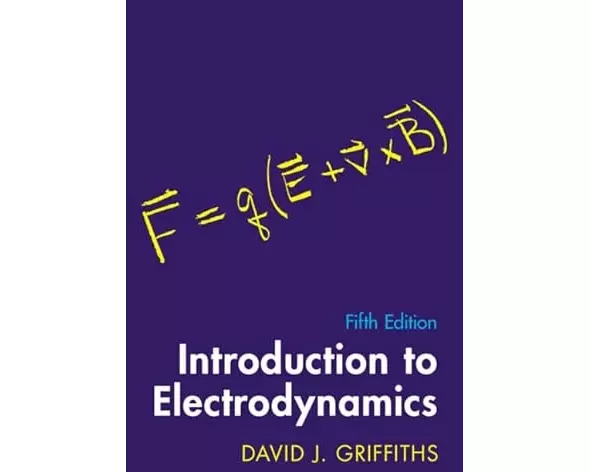
Introduction to Electrodynamics
- Unsere Artikel-Nr.
- QLR2P49
Beschreibung
In this new edition of the standard undergraduate textbook on electricity and magnetism, David Griffiths provides expanded discussions on topics such as the nature of field lines, the crystal ambiguity, eddy currents, and the Thomson kink model. Ideal for junior and senior undergraduate students from physics and electrical engineering, the book now includes many new examples and problems, including numerical applications (in Mathematica) to reflect the increasing importance of computational techniques in contemporary physics. Many figures have been redrawn, while updated references to recent research articles not only emphasize that new discoveries are constantly made in this field, but also help to expand readers' understanding of the topic and of its importance in current physics research.
Spezifikationen
| Sprache | Englisch |
|---|---|
| Autor | David J. Griffiths |
| Erscheinungsjahr | 2023 |
| Format | Buch (Hardcover) |
| Anzahl Seiten | 650 |
Inhaltsverzeichnis
Preface; Advertisement; 1. Vector analysis; 2. Electrostatics; 3. Potentials; 4. Electric fields in matter; 5. Magnetostatics; 6. Magnetic fields in matter; 7. Electrodynamics; 8. Conservation laws; 9. Electromagnetic waves; 10. Potentials and fields; 11. Radiation; 12. Electrodynamics and relativity; Appendix A: Vector calculus in curvilinear coordinates; Appendix B: The Helmholtz theorem; Appendix C: Units; Index.
Bewertungen
Produkt bewertenFür dieses Produkt liegt noch keine Bewertung vor. Wenn Sie es gekauft haben, teilen Sie gerne Ihre Erfahrung.
Zahlungsarten


Rechnung (Einzahlungsschein mit QR-Code), Twint, Kreditkarte, PostFinance, Apple, Google oder Samsung Pay.
Versand
Kostenlos: Schweiz & Liechtenstein
Rückgabe
30 Tage Rückgaberecht
Sie können das Produkt innerhalb von 30 Wochentagen ohne Angabe von Gründen zurücksenden, sofern es unbeschädigt und in der Originalverpackung ist.
Weitere Hinweise finden Sie in unseren AGB unter D.1.