
Auf Lager:6Buch (Softcover): Ratgeber
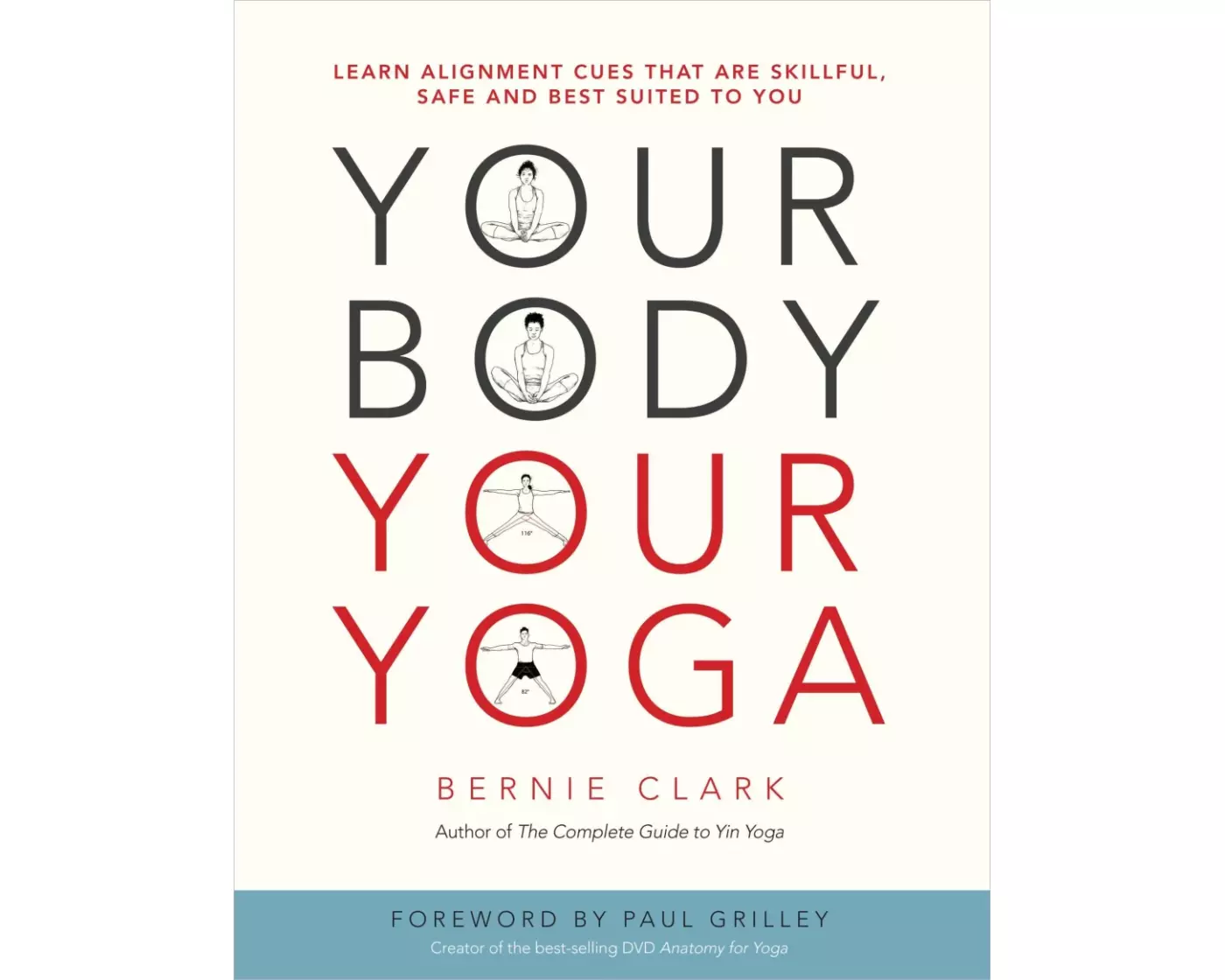
Your Body, Your Yoga
Learn Alignment Cues That Are Skillful, Safe, and Best Suited To You
von Bernie Clark
- Unsere Artikel-Nr.
- 3QV7Z7D
Beschreibung
Your Body, Your Yoga: Learn Alignment Cues That Are Skillful, Safe, and Best Suited to You
Spezifikationen
| Sprache | Englisch |
|---|---|
| Autor | Bernie Clark |
| Erscheinungsjahr | 2016 |
| Format | Buch (Softcover) |
| Anzahl Seiten | 325 |
Inhaltsverzeichnis
Acknowledgements
How to Read this Book
Foreword: The History of Teaching Alignment in America
Table of Contents for Volume 1: What Stops Me? Sources of Tension and Compression
Intentions
Chapter 1: You Are Unique—So Is Your Yoga
Range of Human Variations
Examples of Human Variations
Chapter 2: What Stops Me?
Tension
Compression
Sensing Tension and Compression
Functional Yoga versus Aesthetic Yoga
Chapter 3: The Value of Stress
Chapter 4: The Physiology of Our Tissues
Sources of Tension
Muscles
Myofascia
Tendons
Fascia
Ligaments
The Nervous System
The Immune System
The Wonder of Water
Sources of Compression
Bones
Joints and Cartilage
Volume 1 Summary
Appendix A: The Forms of Stress
Appendix B: Muscle Shapes and Functions
Appendix C: The Myofascial Meridians
Appendix D: Facts About Osteoporosis
Appendix E: The Types of Joints
Appendix F: The Biomechanics of Joint Motion
Volume 1 Endnotes
Table of Contents for Volume 2: The Lower Body
Intentions
1. The Bare Bones of Yoga
The Planes of the Body
2. The Joint Segments of the Lower Body
The Hip Joint
Form
The Architecture of the Hip Joint
The Bones of the Hip Joint
The Joint Capsule and Ligaments
Muscles of the Hip
The Types and Ranges of Variations
Function-Application in Yoga Postures
Normal Ranges of Motion
Sources of Tension
Sources of Compression
Variation in Ranges of Motion
Hip Joint Summary
3. The Knee Joint
Form
The Architecture of the Knee
The Bones of the Knee
The Knee-Joint Capsule and Ligaments
Muscles of the Knee
The Types and Ranges of Variations
Function-Application in Yoga Postures
Normal Ranges of Motion
Sources of Tension
Sources of Compression
Variation in Ranges of Motion
Knee Joint Summary
4. The Ankle-Foot Segment
Form
The Architecture of the Ankle-Foot Segment
The Bones of the Ankle and Foot
The Ligaments
The Muscles and Tendons
The Types and Ranges of Variations
Function-Application in Yoga Postures
Normal Ranges of Motion
Sources of Tension
Sources of Compression
Variation in Ranges of Motion
Ankle-Foot Segment Summary
5 Volume 2 Summary
Appendices
A. List of Anatomical Directions
B. Variations in the Female Pelvis
C. Mechanical Advantage-Pulleys and Levers
D. Flexion-Caused Impingement at the Hip Joint
E. The Dangers and Benefits of Valgum or Varum Knee Orientation
F. The Movements of the Foot and Ankle
Sidebars
It’s Important: Beware of studies
It’s Important: Who is flying the airplane
It’s Important: Playing your edge
It’s Important: Injuries caused by yoga
It’s Important: Antifragility (or no strain—no gain!)
It’s Important: The value of compression
It’s Important: Millimeters versus inches
It’s Important: Safely stressing joints
It’s Important: The value of alignment
It’s Important: Remember, compression can be good!
It’s Important: Co-contraction
It’s Important: Are you valgus or varus?
It’s Important: Don’t assume it’s your ankles!
It’s Complicated: Averages and norms
It’s Complicated: Femoral neck-shaft-angle variations
It’s Complicated: Stress at the cellular level
It’s Complicated: Sarcomere contraction
It’s Complicated: Adding sarcomeres
Its Complicated: Our ground substance
It’s Complicated: Other parts of our joints
It’s Complicated: Which muscles cause which movement can vary
It’s Complicated: Estimating available ranges of motion
It’s Complicated: Femoral acetabular impingement syndrome
It’s Complicated: What is a newton?
It’s Complicated: Hyperextension of the knee
It’s Complicated: The trochlea of the talus
It’s Complicated: What causes plantar fasciitis?
It’s Complicated: Arch support
It’s Complicated: Where should the dorsiflexed foot point?
Note to Teachers: When students can’t go further
Note to Teachers: Stress when injured
Note to Teachers: Should we try to stress tendons?
Note to Teachers: Sources of compression
Note to Teachers: Be cautious of creating alignment cues based only on
your own experience
Note to Teachers: Yoga is a self-selecting practice
Note to Teachers: Explore from the core outwards
Note to Teachers: Customizing Classes
Note to Teachers: Do not offer a correction without knowing the cause!
Note to Teachers: Don’t be afraid of locking the knees
Note to Teachers: Getting grounded
Note to Teachers: Sickling—plantarflexion with supination
Note to Teachers: Aligning the feet in Down Dog
Bewertungen
Produkt bewertenFür dieses Produkt liegt noch keine Bewertung vor. Wenn Sie es gekauft haben, teilen Sie gerne Ihre Erfahrung.
Zahlungsarten


Rechnung (Einzahlungsschein mit QR-Code), Twint, Kreditkarte, PostFinance, Apple, Google oder Samsung Pay.
Versand
Kostenlos: Schweiz & Liechtenstein
Rückgabe
30 Tage Rückgaberecht
Sie können das Produkt innerhalb von 30 Wochentagen ohne Angabe von Gründen zurücksenden, sofern es unbeschädigt und in der Originalverpackung ist.
Weitere Hinweise finden Sie in unseren AGB unter D.1.